Paris · GeoNFC
The tower that learned to speak.
Something invisible helped preserve this iron landmark.
Without a recording, we use a voice available on your device. Quality and availability depend on the browser.
The place’s story · free
Eiffel Tower
The Eiffel Tower began as a spectacular attraction. Scientific experiments and radio communication helped give it a lasting purpose.
- 1889
- opening for the world exhibition
- 1898
- radio link to the Panthéon
Read the full guide
Look up and imagine that the tower might not have remained here. The Eiffel Tower opened for the Paris world exhibition in 1889. Its long-term survival was not guaranteed from the start. Gustave Eiffel therefore supported scientific uses for the structure. Its height was useful for radio experiments. On 5 November 1898, Eugène Ducretet established a radio link between the tower and the Panthéon. Radio technology later gained strategic importance. The tower’s usefulness as an antenna helped secure its future. You are looking not only at ironwork, but at a tool that once overcame distance with an invisible signal. Sometimes a monument is preserved because people find a new story for it.
Historical source ↗3D · Eiffel Tower
Explore the place in 3D
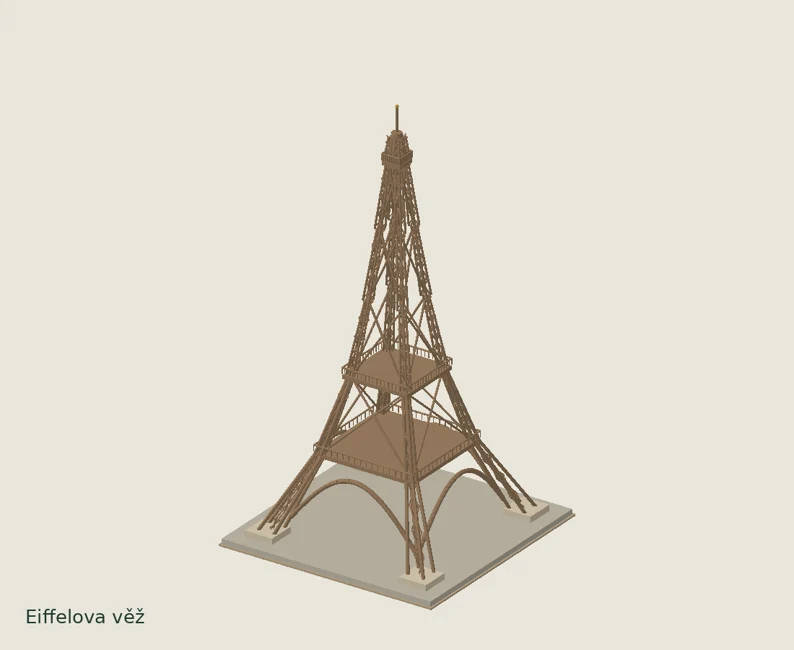
Stylised model with simplified proportions. Historical Les Halles and the Bastille are illustrative reconstructions.
Your code for this place
This code belongs to this passport. Use it at another stop to unlock both stories.
A stamp records a page visit; it does not by itself verify physical presence.
Atlas of Lost Voices
A dispatch for a vanished fortress
The voices of the people who gave the city life are fading. Find their messages and restore the atlas. Five Paris stops form the main quest; Versailles is a bonus.